1. Inflation:
Of all the economic challenges facing the country, high inflation remains the most crucial for the public. With the bulk of increase in headline inflation being fed by consistently surging food and energy prices, it is the present government’s policies and poor governance that are to blame for the crisis. Food inflation has shot up by 12.6pc in the first four months of the present fiscal. The impact of the upward adjustments in fuel and power tariffs is equally pronounced on the life of the average Pakistani.
Those of us who have recently been grocery shopping or filled their car or motorcycle tanks or paid their electricity bills know how steeply prices have jumped from a month ago. So when officials tell the ordinary citizen that Pakistan is still cheaper than many other countries they are only betraying their total disconnect with those reeling under the unbearable mass of inflation tax. With the prices of everything escalating left, right and centre, the ‘historic relief’ of Rs1,000 per family (of 6.5 persons) per month becomes meaningless for the recipients. Little wonder then that more and more people across the country are complaining of inflation now. The government would do everyone a favour by taking more serious action to mitigate the increasing economic hardship being endured by people in the wake of soaring inflationary pressures.
2. Current Deficit:
Pakistan’s current account deficit reduced sharply to $0.5 billion in February 2022, which is the lowest in the financial year 2021-22 and only one-fifth level as compared to January 2022 when it stood at $2.5 billion.
The deficit shrank mainly due to the receipts of exports which were at all-time highs — rising 16 percent last month as compared to January. Remittance also grew by 2.2 percent despite fewer days in the outgoing month against the previous month. On the other hand, imports fell by 18 percent to their lowest level in February in the current financial year. According to the State Bank of Pakistan (SBP), the current account deficit has been restrained to $12.09 billion during the eight months of the current financial year 2021-22. Last year, the current account stood in surplus of $994 million, mainly due to controlled imports and stable receipts of exports and inflows of remittances. Higher cost of imports on account of petroleum products, raw materials for automobile and textile sectors, and various commodity prices have kept the imports higher, which has, in turn, widened the trade deficit and Pakistan’s current account deficit.
The staggering current account deficit had created a persistent worrisome situation for the economic managers and the banking regulator which has introduced various strict measures to curb non-essential imports by the country. However, the results are yet to be seen as the import bill has remained out of control since the beginning of the current financial year. In the face of a substantial increase in the global commodity prices, the growth recovery was accompanied by a build-up in inflationary pressures and a widening current account deficit, as per the SBP’s report on The State of Economy.
3. Unemployment:
The number of unemployed people in the country 4.45 percent approximately, a minor decrease from 4.65 percent the previous year 2020.
According to the government’s annual plan 2020-21, Pakistan has the 9th largest labor force in the world which is increasing every year.
Pakistan is experiencing the phenomenon of unemployed educated people, particularly jobless graduates. The unemployment rate among degree holders is almost three times higher than the other overall unemployed people. The reason given for this is a mismatch between the education being imparted and the need of the economy to sufficiently absorb fresh graduates. Similarly, the gender-based difference of unemployment, according to Labor Force Survey 2017-18, shows higher rate among the female than the male 8.27pc and 5.07pc, respectively.
The youth unemployment rate is quite high as compared to the average unemployment rate. The highest overall unemployment rate (11.56pc) is prevalent among the age group of 20-24 years. The annual plan, while underlining the importance of employment, says that provision of productive, remunerative and decent jobs is the basic mechanism to distribute benefits of growth among the poor segments of society. Creation of productive employment opportunities is one of the priorities of the government. Provision of employment, particularly to the youth, is a big challenge and highly important to develop and utilise capabilities of the younger generation.
4. Budget Deficit:
The incumbent government of Pakistan under Prime Minister Imran Khan has presented its third budget for the Fiscal Year 2021-22. This budget has a value of Rs8.49 trillion, an increase of Rs700 billion over the last budget, and a GDP growth rate target of 4.8 percent. The 2021-22 budget is important as the country has presented positive economic indicators over the last 6 months of the FY21.
5. Trade Deficit:
The reversing trend in trade deficit was witnessed for the fifth consecutive month as merchandise trade deficit reached $5.107 billion in November against $1.946bn over the corresponding month last year, according to provisional data released. This is the highest trade deficit recorded in a single month in terms of value.
The current year started with a rising import bill which poses a serious threat putting pressure on the external side. The import bill in November reached an all-time high of $8.01bn from $4.12bn over the corresponding month last year, indicating an increase of 94.41pc.
The highest-ever increase in imports also helped the Federal Board of Revenue collect maximum revenue at import stage sales tax, withholding tax and customs duty. However, the government’s battle against the bloated trade deficit is reversing and may cause pressure on the external side because of all-time high imports.
The first five months of the current fiscal year saw a rise of more than 117.25pc in trade deficit. The merchandise trade deficit rose to $20.746bn in July-November 2021 from $9.549bn over the corresponding months last year. The Ministry of Finance believes that an increase in remittances, growth in export proceeds and Roshan Digital Accounts will help mitigate the pressure to a large extent. Razak Dawood termed the growth in export proceeds in November a historic one, saying the export target for five months was $12.2bn. The monthly target for November was $2.6bn.
Export proceeds went up by 18.2pc to $25.294bn in FY21 from $21.394bn over the last year.
6. Less Foreign Exchange Reserves:
Foreign exchange reserves (also called forex reserves or FX reserves) are cash and other reserve assets such as gold held by a central bank or other monetary authority that are primarily available to balance payments of the country, influence the foreign exchange rate of its currency, and to maintain confidence in financial markets. Foreign exchange reserves assets can comprise banknotes, deposits and government securities of the reserve currency, such as bonds and treasury bills.[2] Some countries hold a part of their reserves in gold, and special drawing rights are also considered reserve assets.
For over three years this regime maintained the foreign reserves on loans borrowed from friendly countries and multilateral financial institutions. In June 2021 the foreign exchange reserves with State Bank of Pakistan (SBP) stood at $17.299 billion. After that the SBP received a deposit of $3 billion from Saudi Arabia. And then $1billion from the IMF. After nine months, deposits with SBP declined to $14.962 billion. Pakistan’s imports in the first eight months of this fiscal totaled $33.858 billion, averaging $4.22, but the average of the last four months is above $5 billion. In the last nine months Pakistan obtained $1 billion through bonds floated in the international market.
Economy lost $7.337 billion of foreign reserves in the nine months.
SBP reserves fell $815.2 million per month, which comes to $9.78 billion a year.
More than 85 percent of the Pakistani passengers travel by foreign airlines as PIA is restricted to few routes.
In case, the foreign reserves remain low, the central bank will be obliged to increase the interest rates to support rupee.
7. Currency Devalue:
The value of the Pakistani rupee has fallen by 30.5 percent against the US dollar over the last three years and four months under the government of Pakistan Tehreek-e-Insaf (PTI).
The rupee witnessed massive depreciation from Rs123 against the US dollar in August 2018 to Rs177 against the US dollar in December 2021, a decline of 30.5 percent over the last 40 months. This makes it one of highest devaluations of the currency in the country’s history. The only other higher devaluation occurred when Dhaka fell and Pakistan’s currency was devalued by 58 percent from Rs4.60 to Rs11.10 against the US dollar in 1971-72.
Many independent economists argue that this recent devaluation of the currency was dictated by the IMF through prior actions and it has nothing to do with macroeconomic fundamentals.
Dr Ashfaque Hassan Khan, a former economic adviser, said that there was a complete breakdown of economic policymaking as the country’s fiscal policy had become subservient to monetary and exchange rate policies. He said that the monetary tightening and exchange rate depreciation resulted in higher inflation, public debt and debt servicing. The empirical evidence showed that the one percent monetary tightening hiked the inflationary pressure by 1.3 percent in the case of Pakistan.
An analysis of regional currencies versus the US dollar shows that the Pakistani currency experienced massive depreciation compared to others.
The Indian rupee stood at 75.39 against a US dollar. The Indian rupee stood at Rs70.09 against the US dollar in 2018, Rs73.66 in December 2019, Rs74.53 in March 2020 and Rs74.57 in April 2021. In the case of Bangladesh, the Bangladeshi Taka stood at 85.76 against the US dollar and it hovered around 84 to 85.9 on average over the last two years. Meanwhile, the Pakistani rupee continued to fall in value and stood at Rs177 against a US dollar in December 2021. It depreciated sharply from Rs123 against to Rs177 against a dollar over the last three years and four months.
8. Demand and Supply Contraction and Expansion:
(i) Expansion of Demand and Contract of Demand
Expansion of demand refers to the period when quantity demanded is more because of the fall in prices of a product. However, contraction of demand takes place when the quantity demanded is less due to rise in the price of a product.
(ii) Expansion of Supply and Contract of Supply
Expansion of supply refers to rise in the quantity supplied of a commodity only due to a rise in its price. Contraction in supply refers to fall in the quantity supplied of a commodity only due to a fall in its price.
9. Water Shortage in Pakistan:
Water scarcity is a frightening situation that is already happening in Pakistan. The country ranks 14 among the 17 ‘extremely high water risk’ countries of the world, a list that includes hot and dry countries like Saudi Arabia. Over 80 percent of the total population in the country faces ‘severe water scarcity’ for at least one month of the year.In addition to surface water, Pakistan’s groundwater resources the last resort of water supply are severely overdrawn, mainly to supply water for irrigation. If the situation remains unchanged, the whole country may face ‘water scarcity’ by 2025. The situation is strategically more complicated, as Pakistan is the lower riparian country to India and 78 percent of its water inflows from therein. Moreover, only two thirds of available water is being utilised while one-third of the water is either lost or discharged into the sea. Over the last few decades, Pakistan has drastically changed from being a water abundant country to a water-stressed country. With 2.8 percent of the global population, Pakistan accounts for 0.5 percent of global renewable water resources, the country ranks 36th in total renewable water resources Over the last few decades, Pakistan has drastically changed from being a water abundant country to a water-stressed country with 2.8 percent of the global population, Pakistan accounts for 0.5 percent of global renewable water resources.
9.1. Power Supply Shortage:
Forecasting electricity demand has a strategic significance. Accurate forecasting helps ensure the sustained socioeconomic growth of a country. The need for energy drives authorities to explore new energy resources as well as to expand the transmission and distribution (T&D) system. Economic growth and electricity consumption show a linear relationship, which necessitate policies to effectively meet forthcoming challenges. Pakistan is facing serious energy shortfalls. Extensive economic growth has stimulated electricity consumption across all economic sectors. Electricity generation in 2020 stood at 22 GW against 25 GW peak demands however, the actual peak demand ratio is widening annually. As a result, the entire country endures blackouts for 3–4 h a day. Electrical shortages are likely caused by multiple factors including ineffective power polices, heavy T&D losses, mismanagement of indigenous resources, and continues use of obsolete thermal power plants that burn costly imported fossil fuels. The Pakistani government understands the situation and has developed policies to increase energy production, but with mixed success.
10. Pollution and Wastages:
Pollution in the country is making the environment unhealthy and unsuitable. Pollution can be controlled if not eliminated through efforts to promote a green environment and ensure a proper disposal of waste. That is not all. The government and the public need to:
1) plant trees/cultivate gardens to curb air pollution;
2) switch off equipment using electricity when not in use; 3) use recyclable products, wherever possible and stop using plastic bags.
Other measures to reduce our carbon footprint is reducing the use of hazardous chemicals and reduce the use of heaters and air conditioners while increasing the use of public transport to reduce noise, air and other pollution.
We can save the planet by not disposing garbage, untreated sewage and plastic in oceans and rivers.
11. Failure in Resources Utilization:
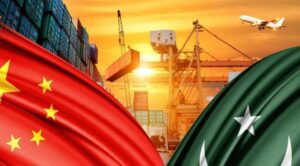
Pakistan is a country that is blessed with enormous natural resources. The natural assets in the country play a vital role in contributing to the whole economy of Pakistan. It is used for the economic consumption or production. However, the utilization of natural resources effectively is required to grow the country’s economy and to improve development. Other countries like China is also highly concerned to invest in Pakistan as to gain profits by utilizing the natural resources of Pakistan and this step is also beneficial for Pakistan as the investment done in the country increases the job opportunity that lead the employment growth and the right use of the natural resources also helps to boost the overall economy, according to the official reports.
Natural resources referred to as the ones that exists without any kind of humankind’s actions. Water, land, atmosphere, sunlight, vegetation and much more is included in it; however, the major subdivision includes four categories that are energy and mineral resources, water resources, biological resources, and soil resources.
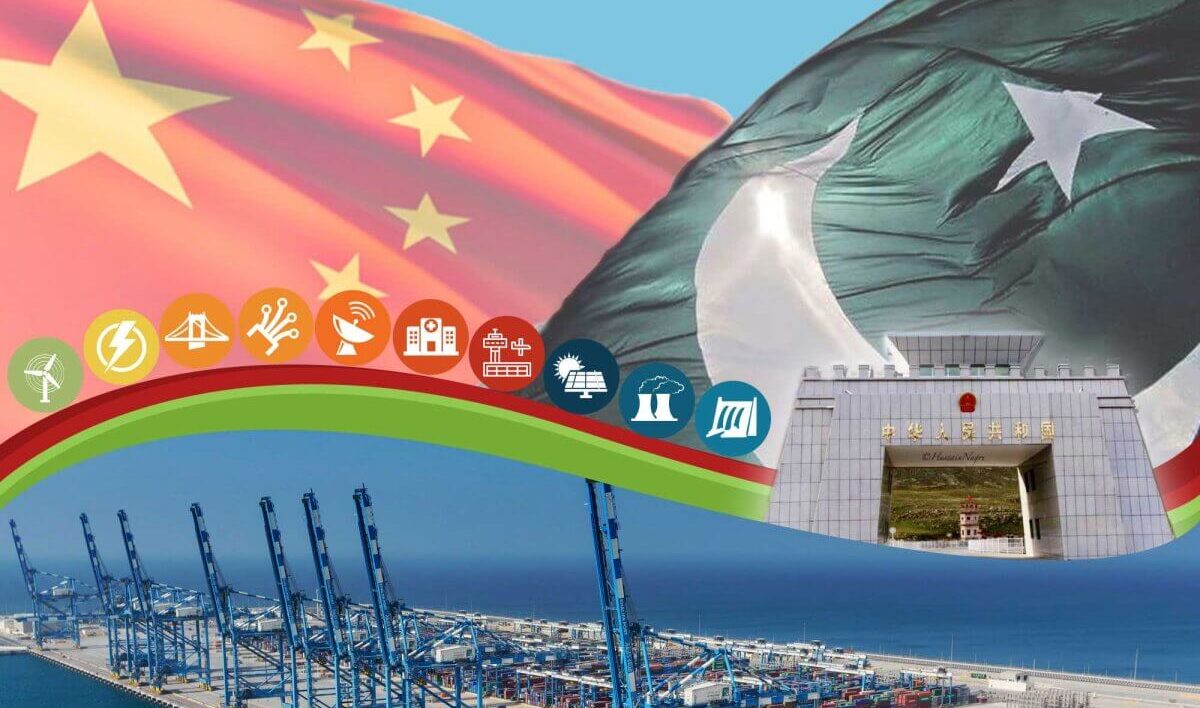
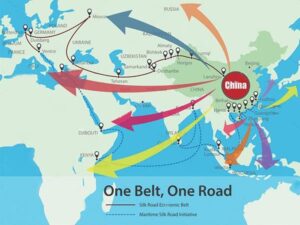
Huge projects are under construction in Pakistan where the natural resources are utilizing in the projects efficiently. CPEC- China Pakistan Economic Corridor is one of its example where the coal, power plants, water, energy, etc. all are used to build this project.
Pakistan is growing through resources utilization it is a blessed land where enormous resources are present and the location of the country is ideal that can be an economic hub for other neighboring countries also to do trade as well as to use the resources of our land.
12. Infrastructure Problem:
Public infrastructure in Pakistan has made some progress over the last five decades. However, compared to other similar countries, the rate of improvement in Pakistan has been among the slowest for the majority of public infrastructure sectors. This has matched the relatively weak economic growth performance of the country in recent decades, which has remained at or below the median country in the world. Moreover the infrastructure improvement has been insufficient to ameliorate substantially the infrastructure conditions of Pakistani citizens.
13. Corruption:
Pakistan dropped 16 places in the Corruption Perceptions Index (CPI) for 2021 compared to the previous year, ranking 140 out of 180 countries, Transparency International said in a report on Tuesday. The CPI, which measures how corrupt a country’s public sector is perceived to be by its experts and businesspeople, uses a scale of zero to 100 where zero is highly corrupt and 100 is very clean. The 2021 edition of the CPI ranked 180 countries and territories by their perceived levels of public sector corruption, drawing on 13 expert assessments and surveys of business executives. In 2020, Pakistan’s CPI was 31 and it was ranked 124 out of 180 countries. According to Transparency International, the country’s corruption score has now deteriorated to 28 while it is ranked 140 out of the total countries on the index.
In contrast, India’s corruption score stood at 40 while Bangladesh’s CPI was 26. The two countries ranked 85 and 147, respectively. While the corruption levels remain at a standstill worldwide, with 86 per cent of the countries making little to no progress in the last 10 years.
Under the PTI government, the ranking of Pakistan has gradually slid. In 2019, it was 120 out of 180 countries, in 2020, it was 124 and in 2021 it worsened further to 140. In 2018, during the PML-N government, the ranking was 117 out of 180 countries.
In its report, Transparency International found countries that violate civil liberties consistently score lower on the CPI. Complacency in fighting corruption exacerbates human rights abuses and undermines democracy, setting off a vicious spiral. As these rights and freedoms erode and democracy declines, authoritarianism takes its place, contributing to even higher levels of corruption.
Ensuring people can speak freely and work collectively to hold power to account is the only sustainable route to a corruption-free society.
14. Crimes:
The menace of crime has shattered the citizens’ confidence in the police Yet another year has passed with incidents of violence, terrorism and other crimes, especially the menace of depriving people of their valuables and other such street crimes, which also left many dead or injured.
According to officials and observers, Pakistan in particular has been faced with the ever-increasing menace of lawlessness in various realms over the past several months, which has resulted in a sharp rise in crimes of various dimensions.
Though the police have repeatedly claimed of improving the law and order situation, the reality on ground belies those claims, as a large number of people have fallen prey to various crime circles. The government and the police are yet to assume control of the country, even after they have vowed to restore the past glory of the country by combating the menace of lawlessness. On the other hand, as the year 2021 drew to a close, many of the officials were still found to be complaining about being faced with a lack of diesel and petrol, due to which the patrolling of police mobiles was affected. Over the past years, street crime has resulted in the loss of hundreds of lives as well as valuables worth millions of rupees looted from the people of Karachi.
The severity of the situation can be gauged from the fact that it has become usual for two to three people to fall victim to street crime in Karachi on a daily basis, with some of them being shot for resisting or, worse, being killed by the muggers.
Apart from street crime, the other major issue pointed out by the officials and observers is the availability of narcotics across Karachi, which they termed the second biggest problem of the city after terrorism.
The presence of drug dens and narcotics across the city has been damaging the futures of the next generation, as addiction has been taking hold of the younger citizens attending colleges and universities.
In Pakistan that around 7,500 criminals involved in incidents of street crime were roaming freely in the metropolis and there was a need to trace and track them through an electronic tagging.
15. Policy making and implementation problem:
Public policy has been a problem since the establishment of Pakistan. Good policy making is the way governments address the problems faced by the people they are elected to serve. Pakistan has failed to evolve a mechanism for consistent policy making and implementation. According to the constitution of Pakistan, the Executive is responsible for the development of public policies. After the 18th Amendment, policy making in several areas including education, health and local government has been devolved to the provinces. In reality, policy making since independence has been dominated by vested interests.
It has been said that if people understand where their governments wish to take them and how they will accomplish this, it is policy; and if they don’t understand it, it may be good politics but not good policy.
There are many factors behind the general public policy failure in Pakistan. These include corruption; insufficient or irrelevant financial allocations; incompetent human resource; poor policy evaluation and monitoring systems; a lack of vision and a centralised approach to implementation, weak institutional structures and frequent interventions. The most important factor is the policy-making team. Policymakers are sent to visit other countries to learn from their experience. But many of them formulate policies without fully appreciating the differences between the circumstances of those countries and the local conditions.
A sound policy-making process is founded in high-quality decisions. This requires empowerment, accuracy and legitimacy. Public policy laid out for any of the sectors has an impact on other sectors. For example, a transport policy affects the environment; an environmental protection policy impacts industrial development; and an industrial development policy impacts the revenue of the state. In short, policy-making means trade-offs. Sometimes the policy makers have to agree to give up on certain benefits on account of the impact the policy might have on other sectors. Good policymakers always strive to find out the unintended impact of their policies.
Policy-making and implementations are two different things. In Pakistan, policies are sometimes made but not enforced. This has been apparent in several fields including health, transport and education sectors. Successive governments appear to have had no interest in improving the education and health policies. No wonder the conditions at public educational institutions and hospitals continue to deteriorate.
A person may be an expert in environmental protection policy, but not in science and technology. It is unfortunately common in Pakistan to see people formulating public policies where they lack expert knowledge.
16. Money Laundering:
Money laundering defined as the method in which illegally obtained money is altered to make the translation look legitimate. What constitutes money laundering? Money laundering occurs when the location, source, ownership, or control of funds are falsified. Money laundering is illegal because it is a way for criminals to profit from crime and often involve more than one illegal activity. Both the act and origin of money laundering make it illegal. The first crime occurs when a criminal secures the funds and the second crime is trying to legitimize the proceeds by misusing financial institutions.
Pakistan is one of the countries that have ongoing problems with money laundering. Also, according to Transparency International Corruption Index, Pakistan has 31st place from 0 to 100. According to World Governance Indicator, Pakistan has 21st place in Controlling Corruption from 0 to 100. Pakistan is included in the Asia Pacific Group on Money Laundering (APG).
Pakistan set a legal basis for financial crime by announcing an Anti-money Laundering Act in 2010. Thanks to the anti-money laundering act, which is applicable all over the country, Pakistan showed its enthusiasm in that field. The act is applicable to both individual persons and entities. If money laundering activities are detected, penalties vary between 1 to 10 years, and if a person is a legal person, the penalty may increase up to 100 million Pakistani Rupee.
17. Tax collection:
The main source of income tax is the personal and the corporate income tax contrinuting above 92% indirect tanes. According to provisional information the FBR has collected net revenue of Rs.3799 billion in 2021, 2022. Tax is collected from indivisual and corporation via direct tax and indirect tax.
these two collections from the govt. revenue, the purpose of tax collection is to help and public works and services and to build and maintain the infrastructure.
It is used for the betterment of the economy, pakistan’s current taxation system is defined by income tax ordinance 2001 (for direct taxes) and sales tax act 1990 (for indivisual taxes) as administrate by FBR.
18. IMF Loan disbursement and payment of Installment:
The IMF assists countries hit by crises by providing them financial support to create breathing room as they implement adjustment policies to restore economic stability and growth. It also provides precautionary financing to help prevent and insure against crises. The IMF’s lending toolkit is continuously refined to meet countries’ changing needs.
Pakistan has received $1.053 billion tranche of its three-year, $6 billion International Monetary Fund (IMF) loan, the central bank said on 5th Feb 2022 (The News). This week the country got $1 billion sukuk proceeds and with the latest $1 billion disbursement from the IMF, the country’s foreign currency reserves have jumped to $24 billion, while the reserves held by the State Bank of Pakistan crossed $17 billion. Following the successful completion of the 6th review of the IMF program, the SBP has received the next tranche of $1.053 billion,” said the SBP in its official twitter handle. The IMF executive board completed its sixth review for Pakistan under the Extended Fund Facility (EFF) on Wednesday and approved the loan disbursement to the country. Now, the total disbursement by the IMF under the EFF program has amounted to $3 billion to Pakistan and provided much needed support to the foreign exchange reserves.
19. Financial Market’s week investment:
Financial markets refer broadly to any marketplace where the trading of securities occurs, including the stock market, bond market, forex market, and derivatives market, among others. Financial markets are vital to the smooth operation of capitalist economies. Financial markets refer broadly to any marketplace where the trading of securities occurs. There are many kinds of financial markets, including (but not limited to) forex, money, stock, and bond markets. When financial markets fail, economic disruption including recession and unemployment can result. Financial markets play a vital role in facilitating the smooth operation of capitalist economies by allocating resources and creating liquidity for businesses and entrepreneurs.
20. Brain Drain:
Brain drain is a slang term indicating substantial emigration or migration of individuals. A brain drain can result from turmoil within a nation, the existence of favorable professional opportunities in other countries, or from a desire to seek a higher standard of living.
Why called it brain drain?
The term “brain drain” was coined by the Royal Society to describe the emigration of “scientists and technologists” to North America from post-war Europe. Another source indicates that this term was first used in the United Kingdom to describe the influx of Indian scientists and engineers.
Suggestion:
Studying the factors of economic growth and development has been at the heart of economists’ research. There is a consensus among economists that these factors capital, labour and technology play the fundamental role in the economic development of a country. These three elements, when capitalized on to the fullest level, enable economic growth. We conclude the case by shedding some light on the on-going identity crises and its consequences in Pakistan. There are people who prefer to reject language, religion, colour and gender bases identities but some of their elements indirectly affect their behaviour and preferences. Therefore, we can infer that identities have a direct or indirect impact on our attitudes and actions.
A country where different identity groups exist, the politics of division and clash over national resources is likely to prevail. Eventually, the distance between identities widens. The politicians attempt to exploit this gap for political point scoring by using populist rhetoric and pushing the real issues aside. Any of them who comes into power favours the demands of people of his identity to win future political support. This unfair preferential treatment breeds a sense of inferiority among other identities. They encounter the situation by taking part in identity politics themselves in order to receive economic more and more advantages. This results in a spillover effect, a situation where one identity group’s access to resources leads to other identity groups competing more and more for those resources as well.
-
HOW TO DEAL WITH CONFLICTS BETWEEN IDENTITIES:
Remember that democracy alone cannot solve the problem of identities unless some important liberal steps – like freedom of speech, freedom of association, limited government etc – are taken, instead, in such a situation democracy can pave way for majoritarian dictatorship. We must remember that immigration has proved to be beneficial to Western economies (Goldin, et al. 2018). The lesson we learn from this is that finding practical solutions for issues of diversity can render it favorable for the economy.
In Pakistan economies, resources are mostly allocated through the free market, and free competition is encouraged so that hard work and innovation must be promoted and rewarded. Moreover, individuals who fail cannot blame their failure on the state for providing no opportunity and discriminating. Resource allocated through measures other than hard work, innovation and productivity in the market system make the Journal of Historical Studies Vol. V No. I (January-June 2019) PP. 1-10 7 deprived sections of the society suffer from a sense of inferiority.
-
RULE OF LAW AND ELIMINATION OF DISCRIMINATORY LAWS:
Same rules elimination of discriminatory laws for all.
-
WHAT DOES PAKISTAN NEED TO DO?
Pakistan, first, needs to make an admission that it is a multiethnic country. Every province has its own language and so as its unique identity. Moreover, there are various sub-languages spoken in all provinces and these sublanguages also have their unique identities. Pakistan not only needs to understand these distinct identities and their historical significance but also stand for their social status that they truly deserve.
Secondly, national identity is not independent of citizens’ individual identities. Punjab is inhibited by two predominantly ethnic groups Punjabi and Siraiki and they take pride in their identity. In Sindh province, a majority is divided between Urdu speaking and Sindhis speaking ethnicities. However, Karachi’s population has a multi-ethnic make-up and various ethnic groups are visible there. Baluchistan province is constituted of Balochs and Pashtuns. Besides, one million Hazarvi are also a major part of its population. Pashtun and Hindko, the both, are the biggest ethnic groups in Khyber Pakhtunkhwa province. Likewise, the members of Kailash tribes and inhabitants of Gilgit Baltistan are also part of Pakistan’s identity. As long as Pakistan keeps importing its identity from foreign cultures or imposes the identity of any single ethnic group over all other ethnicities, the tension will keep heightening and harmony among citizens will not be achieved.
Conclusion:
The capital market plays an essential role in the growth of commerce and industry which ultimately affects the economy of the country to a large extent. This is the rationale that the industrial bodies, government advisors and even the central bank of the country keep a close eye on the activities of the stock market. This conclusion explores the relationship between the stock market development and economic growth in Pakistan for the period of 1986 to 2008. We investigated the stock market development and economic growth relationship by using the two major measures of stock market development, namely: size of the market and liquidity prevalent in the market in terms of market capitalization. The results revealed that economic growth can be attained by increasing the size of the stock markets of a country as well as the market capitalization in an emerging market like Pakistan.