Condition Monitoring: The Complete Guide to Industrial Reliability
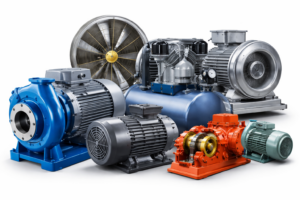
Condition monitoring is a highly effective predictive maintenance strategy used to measure the real-time health of rotating machines and critical industrial equipment while they are in operation.
Instead of relying on reactive maintenance (waiting for something to fail) or preventive maintenance (replacing parts on a strict schedule regardless of wear), a condition monitoring program collects data on vibration, temperature, oil quality, and shaft alignment. This allows plant managers to detect the early signs of wear, misalignment, imbalance, lubrication problems, and electrical faults long before they cause a catastrophic breakdown.
Why Condition Monitoring Matters
Transitioning from reactive firefighting to a data-driven predictive maintenance approach provides massive operational and financial benefits. Implementing a robust condition monitoring system helps industrial plants achieve:
- Lower Downtime: Early fault detection significantly reduces emergency repairs and expensive unplanned outages.
- Reduced Maintenance Costs: Fixing small issues (like a lubrication deficit) is incredibly cheap compared to large repairs or full asset replacements.
- Extended Asset Life: Timely, data-backed interventions naturally extend the operational lifespan of your critical rotating machinery.
- Enhanced Safety & Quality: Stable, well-maintained machines create safer work environments and guarantee more consistent product quality.
- Data-Driven Decisions : Asset health data allows management to accurately plan maintenance budgets and capital investments.
Why Modern Plants Prioritize Condition Monitoring
Transitioning from reactive firefighting to a data-driven predictive maintenance approach provides massive operational and financial benefits:
- Lower Downtime: Early fault detection significantly reduces emergency repairs and expensive unplanned outages.
- Reduced Maintenance Costs: Fixing small issues (like a lubrication deficit) is incredibly cheap compared to large repairs or full asset replacements.
- Extended Asset Life: Timely, data-backed interventions naturally extend the operational lifespan of your critical rotating machinery.
- Enhanced Safety & Quality: Stable, well-maintained machines create safer work environments and guarantee more consistent product quality.
- Data-Driven Decisions: Asset health data allows management to accurately plan maintenance budgets and capital investments.
Key Technologies and Methods
We combine advanced diagnostic technology with industrial experience to deliver practical, result-driven solutions. Here is how we protect your equipment reliability:
Vibration Analysis
1. Vibration Analysis
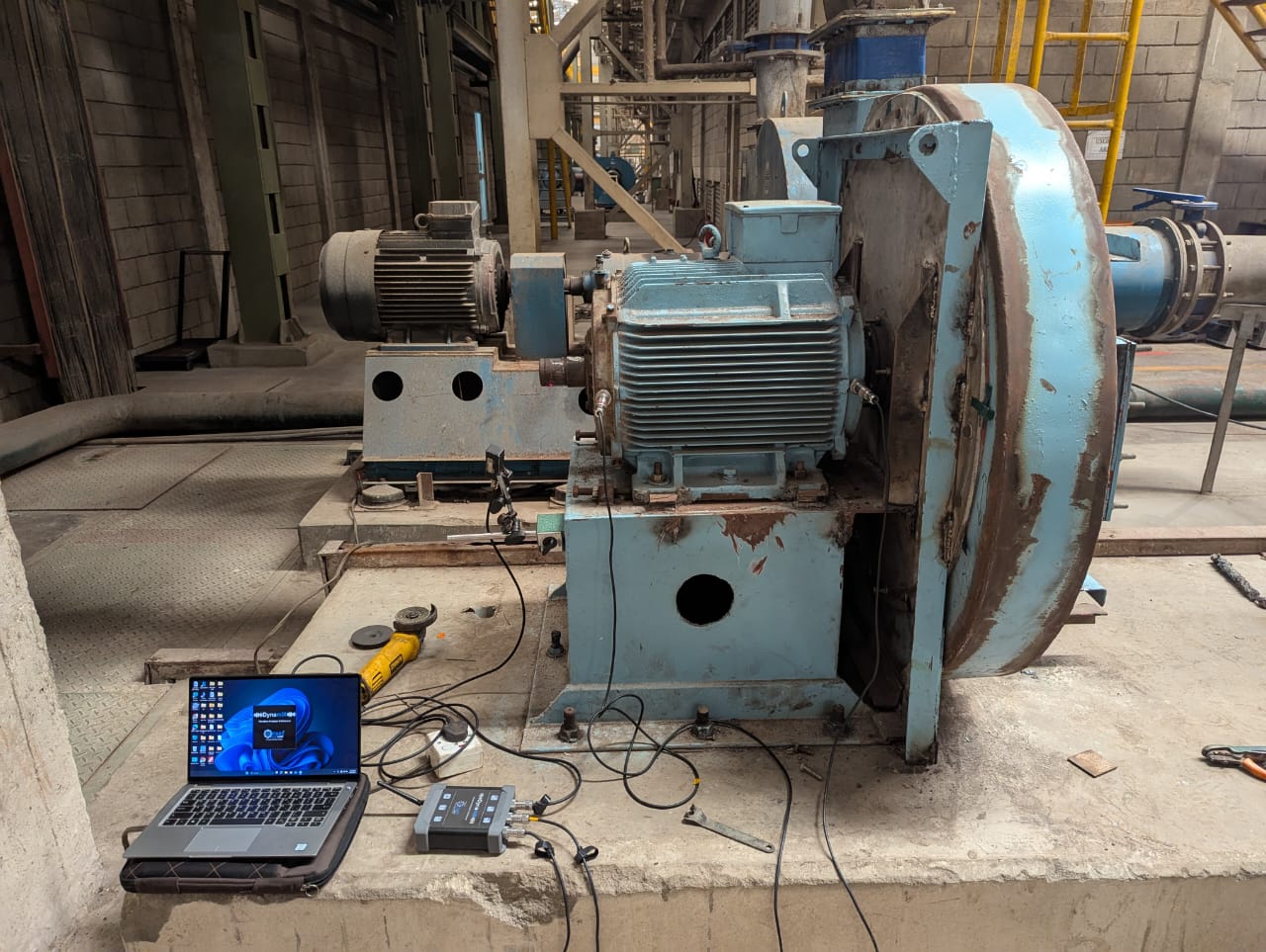
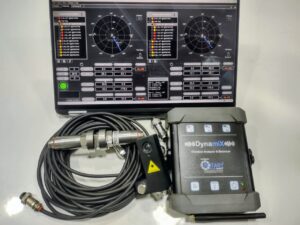
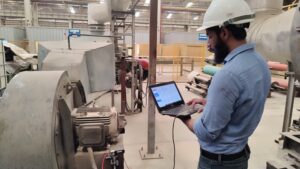
The cornerstone of rotating equipment health. We detect imbalance, bearing defects, mechanical looseness, resonance, and gear faults in motors, pumps, fans, compressors, and gearboxes.
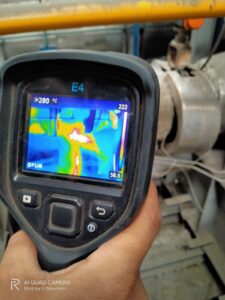
2. Thermal Imaging (Infrared Thermography)
Thermal Imaging
Using non-contact heat detection, we identify overheating bearings, electrical panel faults, loose connections, and insulation failures, preventing electrical fires and mechanical seizing.
3. Dynamic Balancing
We correct rotor imbalance in fans, blowers, and pulleys. This instantly reduces machine vibration, extends bearing life, and improves reliability.
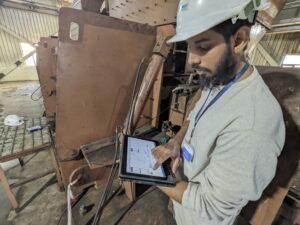
Dynamic Balancing
4. Precision Laser Alignment
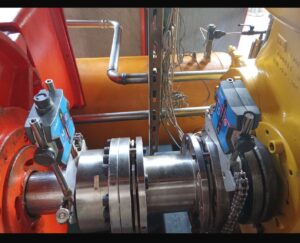
- Laser Shaft Alignment: High-precision motor and pump alignment to reduce vibration and coupling stress.
- Laser Belt Alignment: Accurate pulley alignment to prevent premature belt wear and power loss.
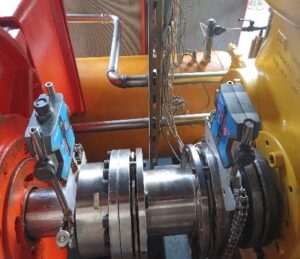
Laser Shaft Alignment
5. Advanced Leak Detection
- Gas Leak Detection: Identifying hazardous leaks to enhance plant safety and environmental compliance.
- Compressed Air Leak Detection: Locating hidden air leaks that waste massive amounts of energy.
6. Motor Management & Borescopy
- Motor Management: Tracking electric motor condition and performance history.
- Borescopy Inspection: Internal visual inspections of gearboxes and turbines without dismantling equipment.
Condition Monitoring Standards: Vibration Severity Chart
To ensure data accuracy, we evaluate machine health against international standards. The ISO 10816-3 (standard for industrial machines) provides a framework for evaluating vibration severity (measured in mm/s RMS).
| Machine Class | Good (A) | Satisfactory (B) | Unsatisfactory (C) | Unacceptable (D) |
| Small Machines | < 0.71 mm/s | 0.71 – 1.8 mm/s | 1.8 – 4.5 mm/s | > 4.5 mm/s |
| Medium Machines | < 1.12 mm/s | 1.12 – 2.8 mm/s | 2.8 – 7.1 mm/s | > 7.1 mm/s |
| Large (Rigid Foundation) | < 1.8 mm/s | 1.8 – 4.5 mm/s | 4.5 – 11.2 mm/s | > 11.2 mm/s |
| Large (Soft Foundation) | < 2.8 mm/s | 2.8 – 7.1 mm/s | 7.1 – 18.0 mm/s | > 18.0 mm/s |
How to Implement a Condition Monitoring Program: 6-Step Plan
- Asset Survey: Audit your plant to identify critical machinery and potential failure modes.
- Baseline Collection: Record baseline vibration and temperature while machines run optimally.
- Sensor Setup: Choose between handheld routes or wireless online IoT sensors.
- Regular Collection: Execute scheduled inspections or monitor real-time data streams.
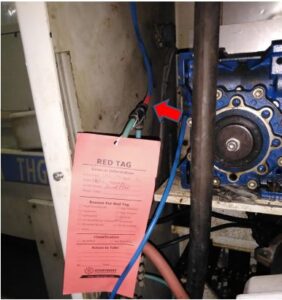
- Analysis & Tagging: Diagnose root causes, rank urgency, and create work orders.
- Corrective Action: Execute fixes (alignment, balancing) and verify the results.
Iso Condition Monitoring Program.
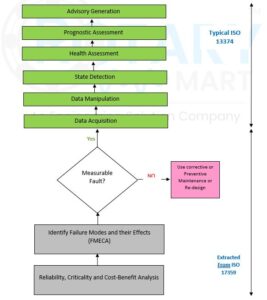
Condition Monitoring in Action: Preventing a Costly Failure
The Scenario: During a routine check in a local textile mill, a critical industrial fan showed a rising vibration signature (1× and 2×) due to mild shaft looseness.
The Action: The maintenance team scheduled a brief, planned outage. They performed laser shaft alignment, execute dynamic balancing, and an oil top-up.
The Result: Vibration dropped by 70%. The plant successfully avoided a Rs. 4,200,000 bearing and shaft replacement cost, along with a 3-day unplanned shutdown.
Ready to eliminate unplanned downtime?
Stop reacting to machine failures and start preventing them. Contact Rotary Mart today to set up a custom condition monitoring program for your facility.