Building Pakistan’s Future: Empowering Industry, Innovation, and Infrastructure

As Pakistan strides towards a more prosperous future, the need for robust industrial growth, innovative solutions, and resilient infrastructure has never been more pressing. The Sustainable Development Goal 9th (SDG 9) – Industry, Innovation, and Infrastructure encapsulates these critical elements, aiming to build a foundation for sustainable economic growth and development. This blog delves into the current situation in Pakistan regarding Sustainable Development Goal 9th, exploring challenges, progress, and the path forward.

Sustainable Development Goal 9th is centered on three main pillars:


  1. Industry: Promoting inclusive and sustainable industrialization.
  2. Innovation: Fostering innovation and supporting domestic technology development, research, and innovation.
  3. Infrastructure: Building resilient infrastructure that supports economic development and human well-being.

Current Situation in Pakistan:

Industrialization:

Pakistan’s industrial sector is a critical driver of economic growth, contributing around 20% to the country’s GDP. Key industries include textiles, food processing, chemicals, and pharmaceuticals. Despite this, the sector faces significant challenges:

  • Energy Shortages: Frequent power outages disrupt production processes and increase costs.
  • Lack of Technological Advancements: Many industries still rely on outdated technology, limiting productivity and competitiveness.
  • Regulatory Hurdles: Complex regulations and bureaucratic inefficiencies hinder business operations and deter investment.

Innovation:

Innovation is crucial for transforming industries and improving productivity. However, Pakistan’s innovation landscape is still evolving:

  • Low R&D Investment: Public and private sector investment in research and development (R&D) is minimal.
  • Brain Drain: A significant number of skilled professionals migrate abroad, seeking better opportunities.
  • Limited Collaboration: There is a lack of collaboration between academia, industry, and government, stifling innovation.

Infrastructure:

Infrastructure development is vital for industrial growth and improving quality of life. Pakistan has made some strides in this area, but gaps remain:

  • Transportation Networks: Roads, railways, and ports are crucial for trade and connectivity. While projects like the China-Pakistan Economic Corridor (CPEC) are improving infrastructure, rural and remote areas still suffer from poor connectivity.
  • Digital Infrastructure: Internet penetration is growing, but rural areas lag behind, limiting access to digital services and opportunities.
  • Urbanization Challenges: Rapid urbanization has strained existing infrastructure in cities, leading to issues like traffic congestion, inadequate housing, and poor sanitation.

Progress and Initiatives:

Despite these challenges, Pakistan has undertaken several initiatives to advance Sustainable Development Goal 9th:

  • CPEC: This flagship project aims to enhance connectivity and trade routes, boosting industrial growth and creating job opportunities.
  • National Incubation Centers: Established in major cities, these centers support startups and foster innovation.
  • Special Economic Zones (SEZs): These zones offer incentives to attract investment and promote industrialization.
  • Digital Pakistan Vision: This initiative aims to improve digital infrastructure and promote digital literacy across the country.

Path Forward:

To achieve SDG 9, Pakistan must adopt a multifaceted approach:

  1. Enhancing Energy Infrastructure: Investing in renewable energy sources and modernizing the grid to ensure a reliable power supply.
  2. Promoting R&D: Increasing public and private sector investment in research and fostering collaboration between academia and industry.
  3. Supporting SMEs: Providing financial and technical support to small and medium-sized enterprises, which are crucial for industrial growth.
  4. Improving Regulatory Environment: Simplifying regulations and reducing bureaucratic hurdles to attract domestic and foreign investment.
  5. Expanding Digital Access: Ensuring equitable access to digital services and infrastructure, particularly in rural areas.
  6. Sustainable Urbanization: Developing sustainable urban planning strategies to accommodate the growing urban population.


Conclusion

Achieving SDG 9 in Pakistan is essential for building a resilient and inclusive economy. By addressing the current challenges and leveraging opportunities, Pakistan can foster industrial growth, spur innovation, and develop robust infrastructure, paving the way for sustainable development and prosperity. The journey towards SDG 9 is complex, but with concerted efforts from all stakeholders, it is within reach.


 

How Artificial Intelligence Help in Industrial Relations to Retain the Employees?

AI can analyze vast amounts of employee data, such as performance reviews, engagement surveys, and feedback, to identify patterns and predict potential issues or turnover risks. By proactively identifying employees who may be dissatisfied or at risk of leaving, organizations can take targeted actions to retain them.

2. Personalized Recommendations:

AI-powered systems can provide personalized recommendations to employees based on their skills, interests, and career goals. By understanding individual preferences and aspirations, organizations can offer targeted training, development opportunities, or career paths, increasing job satisfaction and reducing turnover.

3. Talent Acquisition and Onboarding:

AI can streamline and enhance the recruitment and onboarding processes. AI-powered chatbots can engage with candidates, answer their questions, and provide a personalized experience. Additionally, AI can analyze resumes, screen candidates, and identify the best matches for specific roles, making the hiring process more efficient and effective.

4. Employee Engagement and Feedback:

AI-driven tools can help measure and improve employee engagement. Chatbots or survey platforms can collect real-time feedback from employees, allowing organizations to address concerns promptly and make necessary adjustments. AI can also facilitate sentiment analysis, identifying trends and issues across employee feedback to inform decision-making.

5. Skills Development and Training:

AI can personalize learning experiences by assessing individual skill gaps and delivering targeted training content. AI algorithms can analyze employees’ performance data and recommend appropriate training modules or learning paths, enabling employees to acquire new skills and develop professionally.

6. Performance Management:

AI can support performance management processes by providing objective insights and reducing bias. AI algorithms can assess employee performance based on predefined metrics, ensuring fair evaluations. AI can also automate routine performance-related tasks, such as scheduling check-ins or providing feedback, freeing up managers’ time for more meaningful interactions with their teams.

7. Employee Well-Being and Work-Life Balance:

AI can help monitor employee well-being and work-life balance. For example, AI-powered applications can track work hours, provide reminders for breaks, or even suggest activities to promote relaxation and stress reduction. By supporting employee well-being, organizations can improve job satisfaction and reduce burnout.


Understanding The Basics of Laser Alignment

The world relies on precise machinery, from the engines that power our cars to the delicate instruments used in medical procedures. But how do we ensure these machines are perfectly aligned for optimal performance? Enter laser alignment, a powerful tool that uses the accuracy of lasers to achieve just that.

What is Laser Alignment?

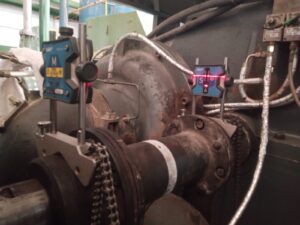
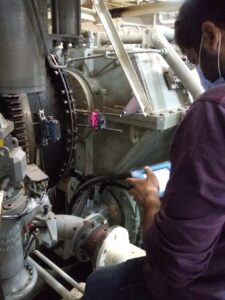
Laser alignment is a technique that utilizes a laser beam to establish precise straightness, parallelism, or angularity between machine components. By directing a laser beam along a machine’s shaft or other critical elements, any misalignments become evident as the beam deviates from its intended path.

Why is Laser Alignment Important?

Improper machine alignment can lead to a cascade of problems:

  • Increased wear and tear: Misaligned components grind against each other, causing premature wear and tear, leading to costly repairs and replacements.
  • Reduced efficiency: Misalignment can cause friction and drag, reducing a machine’s overall efficiency and increasing energy consumption.
  • Poor product quality: Inaccurate alignment can lead to vibrations and inconsistencies in the manufacturing process, resulting in products that don’t meet specifications.

Benefits of Laser Alignment:

Laser alignment offers numerous advantages over traditional alignment methods:

  • High precision: Lasers provide an incredibly accurate reference point, allowing for precise alignment adjustments.
  • Ease of use: Modern laser alignment tools are user-friendly and often come with intuitive interfaces.
  • Time-saving: Laser alignment can significantly reduce the time needed to align machinery compared to traditional methods.
  • Improved safety: By minimizing the need for manual adjustments near moving parts, laser alignment enhances safety in the workplace.

Getting Started with Laser Alignment:

The specific steps involved in laser alignment will vary depending on the machinery and the type of laser alignment tool being used. However, here’s a general overview:

  1. Preparation: Secure the laser emitter and detector onto the designated mounting points on the machine.
  2. Alignment Procedure: Follow the manufacturer’s instructions to project the laser beam onto the corresponding target on the machine.
  3. Adjustment: Based on the laser beam’s position on the target, make adjustments to the machine’s components until the beam hits the center of the target.
  4. Verification: Once adjustments are made, repeat the procedure to verify that the alignment is within the specified tolerance.

Laser Alignment Tools:

There are various types of laser alignment tools available, each catering to specific needs:

  • Shaft Alignment Systems: These systems are used to align rotating shafts, a common application in machine tools and industrial equipment.
  • Line Lasers: Line lasers project a straight line, ideal for aligning components that require a straight path, such as guide rails or conveyor belts.
  • Dot Lasers: Dot lasers project a single red or green dot, useful for aligning components that require precise positioning, like pulleys or bearings.

Conclusion:

Laser alignment is a valuable tool for anyone who wants to ensure the optimal performance and longevity of their machinery. By understanding the basics and employing the appropriate tools, you can reap the numerous benefits of laser alignment and keep your machines running smoothly.

Additional Tips:

  • Always refer to the user manual for your specific laser alignment tool.
  • Invest in proper safety gear, such as safety glasses, when working with lasers.
  • If you’re dealing with complex machinery, consider seeking professional assistance for laser alignment tasks.

By incorporating laser alignment into your maintenance routine, you can contribute to a more efficient, cost-effective, and safer work environment.

The Role of Vibration Analysis in Condition-Based Maintenance Strategies

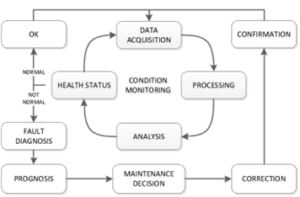
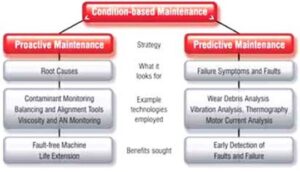
In the realm of industrial maintenance, there’s a silent but powerful ally working tirelessly to ensure smooth operations: vibration analysis. In an era where downtime can be catastrophic and costly, the ability to predict and prevent equipment failures is paramount. This is where condition-based maintenance (CBM) strategies come into play, with vibration analysis emerging as a cornerstone in this proactive approach to maintenance.

Understanding Vibrations:

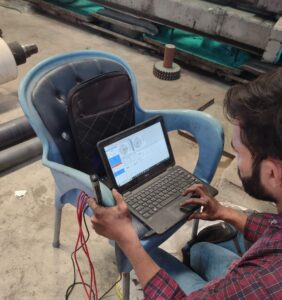
At its core, vibration analysis is the process of monitoring the vibration characteristics of machinery to detect abnormalities that may indicate potential issues. Every piece of machinery has a unique vibration signature, influenced by factors such as rotating components, friction, and structural integrity. By continuously monitoring these vibrations, technicians can identify deviations from normal behavior, allowing them to pinpoint potential faults before they escalate into costly failures.

The Importance of Early Detection:

One of the key advantages of vibration analysis is its ability to detect problems in their infancy. Small defects, such as misalignments, imbalance, or bearing wear, often manifest as subtle changes in vibration patterns long before they cause noticeable performance degradation. By catching these issues early, maintenance teams can schedule repairs during planned downtime, minimizing disruptions to production and avoiding the costly domino effect of unplanned breakdowns. 

Predictive Maintenance: A Proactive Approach

Condition-based maintenance strategies, of which vibration analysis is a fundamental component, represent a shift from reactive to proactive maintenance practices. Rather than waiting for equipment to fail and then addressing the consequences, CBM focuses on preventing failures altogether. By leveraging data collected through vibration analysis, maintenance teams can develop predictive maintenance schedules tailored to the specific needs of each piece of equipment, optimizing maintenance efforts and maximizing uptime.

Maximizing Asset Performance:

Beyond simply preventing failures, vibration analysis plays a crucial role in optimizing asset performance. By monitoring vibration levels over time, maintenance teams can identify trends that may indicate deteriorating conditions or the onset of failure modes. Armed with this information, they can make informed decisions about maintenance intervals, component replacement, and operational adjustments to prolong the lifespan of equipment and maximize its efficiency.

Embracing Technology: The Future of Vibration Analysis

As technology continues to evolve, so too does the field of vibration analysis. Advanced sensors, machine learning algorithms, and predictive analytics are revolutionizing the way we monitor and interpret vibration data, enabling even greater precision and accuracy in detecting potential issues. With the rise of the Industrial Internet of Things (IIoT), machinery is becoming increasingly interconnected, allowing for real-time monitoring and remote diagnostics on a scale never before possible.

Conclusion

In the dynamic landscape of industrial maintenance, the role of vibration analysis in condition-based maintenance strategies cannot be overstated. By harnessing the subtle vibrations emitted by machinery, maintenance teams can unlock a wealth of insights into the health and performance of critical assets. From early detection of faults to predictive maintenance scheduling, vibration analysis empowers organizations to optimize reliability, minimize downtime, and maximize the return on their investment in equipment. As technology continues to advance, the future of vibration analysis promises even greater efficiency, accuracy, and insight, ensuring that our machinery continues to pulse with vitality for years to come.

Fourier Transform and Spectrum Analysis in Vibration Analysis

In the intricate world of engineering and physics, understanding the dynamics of vibrations is paramount. Whether it’s ensuring the structural integrity of bridges, optimizing machinery performance, or diagnosing faults in rotating equipment, the ability to analyze vibrations accurately is indispensable. At the heart of this analysis lie advanced techniques such as Fourier Transform and Spectrum Analysis. In this blog, we delve into the depths of these techniques, uncovering their significance and exploring how they revolutionize vibration analysis.

Understanding Vibrations:

Before we embark on our journey into Fourier Transform and Spectrum Analysis, let’s grasp the essence of vibrations. Vibrations, in essence, are oscillatory motions exhibited by a mechanical system. They can originate from various sources such as machinery operations, environmental factors, or structural resonance. Monitoring and analyzing these vibrations provide crucial insights into the behavior and health of the system under consideration.

The Role of Fourier Transform:

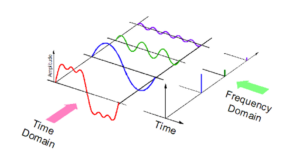
Enter Fourier Transform, a mathematical tool that serves as the cornerstone of signal processing. Named after the French mathematician Joseph Fourier, this transformative technique dissects a complex signal into its constituent frequencies. By representing a time-domain signal in the frequency domain, Fourier Transform unveils the spectral composition of vibrations, enabling engineers to identify dominant frequencies and characterize their amplitudes.

Practical Implementation:

In vibration analysis, Fourier Transform acts as a gateway to understanding the underlying dynamics of a system. Suppose we have a time-series dataset representing vibrations recorded from a rotating machine. By applying Fourier Transform to this dataset, we can extract the frequency components present in the signal. This allows us to pinpoint specific frequencies associated with critical machinery components such as shafts, bearings, or gears.

Spectrum Analysis: Shedding Light on Vibrational Patterns

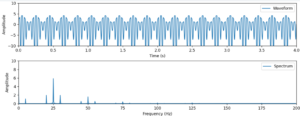
Building upon the foundation laid by Fourier Transform, Spectrum Analysis emerges as a powerful tool for vibration analysis. Spectrum Analysis involves plotting the frequency components obtained from Fourier Transform on a graphical scale known as the frequency spectrum. This spectrum provides a visual representation of the signal’s frequency content, akin to a fingerprint that uniquely identifies the vibrational pattern.

Diagnosing Machinery Faults:

The marriage of Fourier Transform and Spectrum Analysis equips engineers with the means to diagnose machinery faults accurately. By analyzing the frequency spectrum of vibration signals, anomalies such as harmonics, sidebands, and resonances indicative of faults can be detected. For instance, the presence of specific harmonics in the spectrum might signal misalignment or unbalanced components, while sidebands could indicate bearing faults or gear defects.

Advanced Applications:

The utility of Fourier Transform and Spectrum Analysis extends beyond fault diagnosis to predictive maintenance and performance optimization. By continuously monitoring vibrations and analyzing their spectral characteristics, engineers can anticipate impending failures, schedule maintenance proactively, and fine-tune machinery parameters to enhance efficiency and longevity.

Conclusion

In the realm of vibration analysis, Fourier Transform and Spectrum Analysis stand as pillars of insight, illuminating the spectral landscape of mechanical systems. By harnessing the power of these advanced techniques, engineers can unravel the mysteries of vibrations, diagnose faults with precision, and pave the way for enhanced reliability and performance. As technology advances, so too does our ability to decipher the language of vibrations, ensuring that the machinery of today operates at its peak tomorrow.

Exploring Four Maintenance Strategies for Sustainable Operations

Introduction:

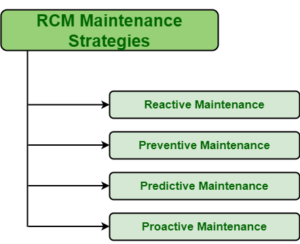
In the dynamic landscape of industry and infrastructure, maintenance stands as a cornerstone for ensuring optimal performance, longevity, and safety. Whether it’s a manufacturing plant, a fleet of vehicles, or a complex network of machinery, adopting effective maintenance strategies is paramount for sustained efficiency and cost-effectiveness. In this blog, we delve into four key maintenance strategies that organizations can employ to streamline operations and enhance productivity.

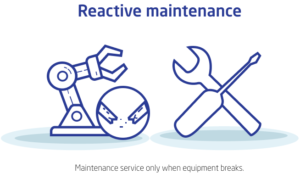
1. Reactive Maintenance:

Fix it when it breaks

Reactive maintenance, often referred to as “breakdown maintenance,” involves addressing equipment failures as they occur. While it might seem like the most straightforward approach, reactive maintenance can lead to costly downtime, emergency repairs, and a negative impact on productivity. However, there are situations where reactive maintenance is unavoidable or even preferred. For equipment with low criticality or when the cost of preventive maintenance outweighs the potential downtime, reactive maintenance might be a viable option. Nonetheless, relying solely on this strategy can be risky and unsustainable in the long run.

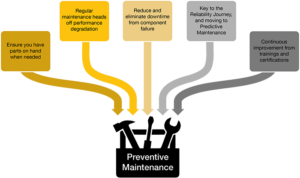
2. Preventive Maintenance:

Perform regular overhauls so that the machine will not fail

Preventive maintenance aims to mitigate the likelihood of equipment failures by scheduling regular inspections, servicing, and repairs. This proactive approach involves conducting routine tasks such as lubrication, part replacements, and system checks based on predetermined schedules or usage thresholds. By adhering to a preventive maintenance schedule, organizations can anticipate and address issues before they escalate into costly breakdowns. This strategy helps minimize unplanned downtime, extend the lifespan of assets, and optimize overall operational efficiency. Additionally, it fosters a culture of reliability and accountability within the workforce.


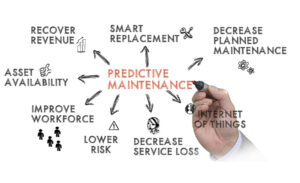
3. Predictive Maintenance:

If it ain’t broke, don’t fix it

Predictive maintenance leverages advanced technologies such as sensors, data analytics, and machine learning algorithms to forecast equipment failures before they occur. By continuously monitoring key performance indicators and analyzing real-time data, organizations can identify patterns, anomalies, and early warning signs of potential issues. This data-driven approach enables predictive maintenance strategies to optimize maintenance schedules, prioritize critical assets, and allocate resources more effectively. By intervening at the right time with targeted maintenance actions, organizations can minimize downtime, reduce maintenance costs, and maximize asset availability and performance.


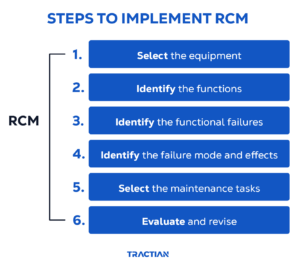
4. Reliability-centered Maintenance (RCM):

To anticipate and solve problems before they become problems

Reliability-centered maintenance (RCM) is a holistic approach that focuses on optimizing maintenance strategies based on the criticality, function, and performance of assets. RCM involves analyzing the potential consequences of equipment failures, identifying appropriate maintenance tasks, and determining the most cost-effective maintenance intervals. Unlike traditional approaches that rely on fixed schedules, RCM emphasizes a tailored and data-informed approach to maintenance planning. By aligning maintenance activities with business objectives and risk tolerance levels, RCM helps organizations achieve higher levels of reliability, safety, and efficiency while minimizing unnecessary maintenance tasks and associated costs.


Conclusion

In today’s competitive landscape, organizations across various industries are under increasing pressure to maximize operational efficiency while minimizing costs and downtime. Effective maintenance strategies play a pivotal role in achieving these objectives by ensuring the reliability, availability, and performance of critical assets. By embracing a combination of reactive, preventive, predictive, and reliability-centered maintenance approaches, organizations can strike a balance between addressing immediate needs and proactively managing asset reliability and performance in the long term. Ultimately, investing in robust maintenance strategies isn’t just about fixing what’s broken—it’s about optimizing operations, driving sustainability, and staying ahead in an ever-evolving marketplace.

0

Search for products

Back to Top
Product has been added to your cart