
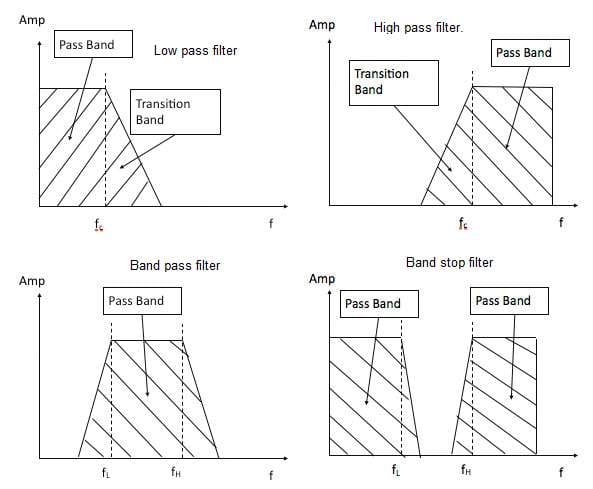
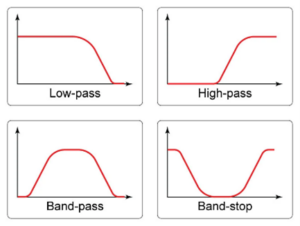
Vibration analysis relies heavily on a tool called filters. Understanding how these filters work is crucial for interpreting vibration data accurately.
There are four main filter types, each designed to manipulate specific frequencies:
Low-Pass Filters:
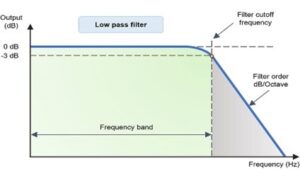
Like gatekeepers, they allow only low frequencies to pass through, filtering out unwanted high frequencies. These are especially useful for removing distortions introduced during data acquisition and conversion.
Band-Pass Filters:
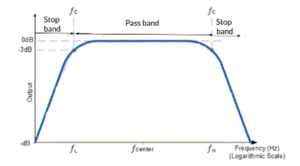
They act like spotlights, focusing only on a designated range of frequencies within a band while blocking out everything else. Imagine a radio tuner that isolates a specific station from background noise. Band-pass filters are ideal for extracting particular tones, like a test signal amidst surrounding noise.
Band-Stop Filters:
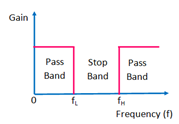
These work in reverse compared to band-pass filters. They function like noise cancellers, removing a specific range of unwanted frequencies while allowing everything else to pass. A common application is eliminating electrical line noise (50 or 60 Hz) from other vibration signals.
High-Pass Filters:
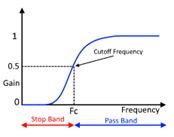
Think of them as focusing on whispers amidst a storm. They let through only high frequencies, blocking out the stronger, lower frequencies. This plays a key role in detecting early signs of bearing wear, which often manifest as subtle high-frequency vibrations.
While perfect filters would completely block unwanted frequencies, real filters aren’t that sharp. They have a fuzzy area where some frequencies weaken instead of being entirely stopped. Understanding these filter limitations is crucial to focusing on the data we actually care about.



Leave a comment
Your email address will not be published. Required fields are marked *