Demonstrate Vibration Analysis: A Beginner’s Guide

Introduction:
Vibration analysis might sound like a complex topic reserved for experts, but its principles are quite accessible, even for beginners. Whether you’re curious about machinery maintenance, engineering, or simply intrigued by the physics of vibrations, this beginner’s guide aims to demystify the fundamentals of vibration analysis.
Understanding Vibration:
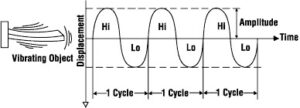
Vibration, in simple terms, is the back-and-forth movement of an object. Everything vibrates, from the buzzing of your smartphone to the rumble of a passing truck. In machinery, vibration can indicate the health and performance of various components.
Why Analyze Vibration?
Vibration analysis is crucial for several reasons:
- Predictive Maintenance: By monitoring vibrations, we can detect early signs of machinery malfunction, preventing costly breakdowns.
- Performance Optimization: Analyzing vibrations helps fine-tune machinery for optimal efficiency and longevity.
- Safety: Excessive vibration can lead to equipment failure or even pose safety risks to personnel.
Key Concepts:
- Frequency: Vibration frequency refers to the number of oscillations per unit of time. It’s measured in Hertz (Hz).
- Amplitude: Amplitude measures the extent of vibration, indicating the intensity or strength of the oscillations. It’s typically measured in units like millimeters or inches.
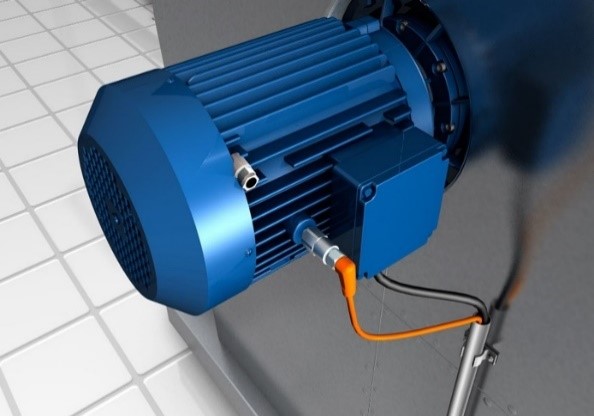
- Transducers: Devices called transducers convert mechanical vibrations into electrical signals, which can then be analyzed and interpreted by software or experts.
Vibration Analysis Techniques:
- Time Domain Analysis: This method involves analyzing the vibration signal in the time domain, focusing on characteristics such as amplitude, frequency, and phase.
- Frequency Domain Analysis: Here, the vibration signal is transformed into the frequency domain using techniques like Fourier analysis. This allows engineers to identify specific frequencies associated with machinery faults.
Tools and Technologies:
- Accelerometers: These sensors measure acceleration and are commonly used in vibration analysis to detect and quantify vibrations.
- Vibration Analyzers: Specialized instruments that capture, process, and analyze vibration data, providing valuable insights into machinery health.
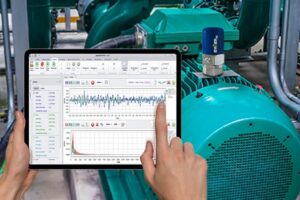
- Software: Advanced software packages are available for in-depth vibration analysis, featuring tools for data visualization, signal processing, and fault diagnosis.
Practical Tips for Beginners:
- Start with the Basics: Familiarize yourself with fundamental concepts like frequency, amplitude, and transducers before diving into complex analysis techniques.
- Hands-On Experience: Practice using vibration measurement tools and software to develop your skills and intuition.
- Learn from Experts: Seek guidance from experienced professionals or enroll in training courses to deepen your understanding of vibration analysis.
Conclusion
Vibration analysis is a powerful tool for predicting machinery failures, optimizing performance, and ensuring safety in various industries. By understanding the basic principles and techniques of vibration analysis, beginners can embark on a journey of exploration and discovery in this fascinating field. So, let’s embrace the vibrations and unlock the secrets they hold!